

While Arizona is widely celebrated for its sunny skies and relatively low cost of living, homeowners here enjoy another hidden perk: property tax exemptions in Arizona that can significantly reduce annual housing costs.
Whether you’re a retiree, a widow, or a resident living with a disability, the state offers several programs designed to ease your tax burden.
This guide breaks down Arizona property tax relief programs, helping you understand how to take advantage of them—and make sure you’re not paying more than you legally owe.

Does Arizona Have Property Tax?
State Overview
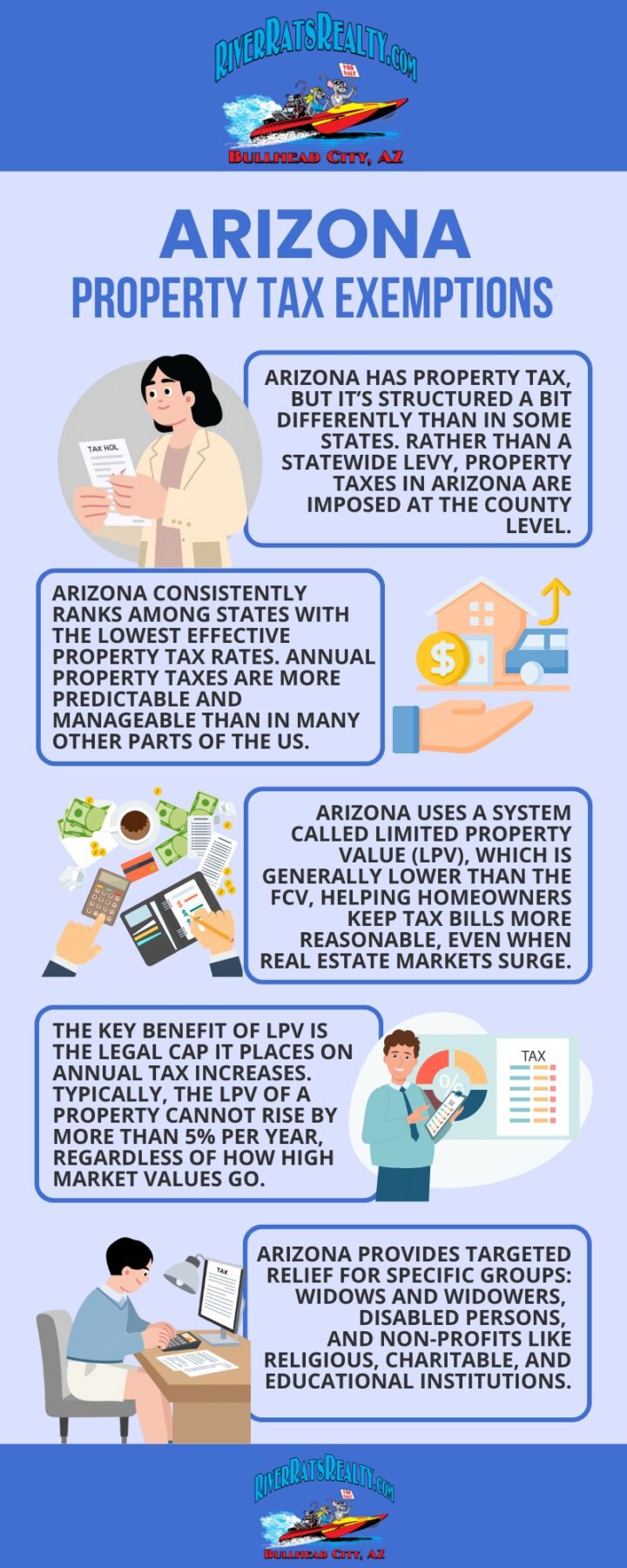
The simple answer is yes—Arizona does have property tax—but it’s structured a bit differently than in some states. Rather than a statewide levy, property taxes in Arizona are imposed at the county level.
Each county assessor evaluates the value of real property and sets tax bills accordingly, with rates varying depending on local budgets and voter-approved measures.
Low Rate Environment
Despite having property taxes, Arizona consistently ranks among states with the lowest effective property tax rates in the U.S.
For homeowners, this creates a favorable environment—especially for retirees—where annual property taxes are more predictable and manageable than in many other parts of the country.
Still, even a modest tax bill can add up over time, which is why understanding Arizona property tax relief programs is crucial.

Understanding Limited Property Value
The LPV Concept
Arizona uses a system called Limited Property Value (LPV), which is different from the more commonly understood Full Cash Value (FCV) of a home.
While FCV reflects the estimated market value of a property, LPV is the valuation used specifically for calculating property taxes.
The LPV is generally lower than the FCV, helping homeowners keep tax bills more reasonable, even when real estate markets surge.
Tax Cap
The key benefit of LPV is the legal cap it places on annual tax increases. Typically, the LPV of a property cannot rise by more than 5% per year, regardless of how high market values go.
This means that even if your home appreciates rapidly, your tax bill won’t suddenly spike. It’s a protective measure that gives Arizona homeowners peace of mind and helps long-term residents, including retirees, manage fixed incomes more effectively.

Who Is Exempt From Paying Property Taxes
Arizona provides targeted relief for specific groups. Knowing who is exempt from paying property taxes can save you significant money.
Widows and Widowers
The Widow/Widower exemption in Arizona offers a reduction in assessed value for surviving spouses who meet age, income, and residency requirements.
To qualify, you typically need to have lived in the home as your primary residence and fall below an income threshold set by the state.
This exemption recognizes the financial strain that can accompany the loss of a spouse and helps surviving partners remain in their homes.
Disabled Persons
Residents who are totally and permanently disabled may also qualify for property tax exemptions in Arizona. The reduction in assessed value can be substantial, depending on the degree of disability and household income.
These exemptions are designed to ensure that individuals living with long-term disabilities are not overburdened by property taxes.
Non-Profits
While this guide focuses on individual relief, it’s worth noting that religious, charitable, and educational institutions are completely exempt from property taxes.
This distinction highlights the difference between residential relief programs and full organizational exemptions, ensuring homeowners and non-profits alike understand their options.

The Senior Property Valuation Protection Option
The “Senior Freeze”
One of Arizona’s most valuable programs for retirees is the Senior Property Valuation Protection option, commonly known as the “Senior Freeze.”
This program allows qualifying seniors to freeze the LPV of their primary residence, meaning that their property tax cannot increase from year to year, even if the market value of their home rises.
Eligibility
To qualify for the Senior Freeze, you must meet several requirements:
- Be 65 years or older.
- Have lived in your home for at least two consecutive years.
- Meet strict income limits, which vary depending on the county and whether you file jointly or individually.
For seniors on a fixed income, this program provides invaluable financial predictability, preventing unexpected tax hikes and helping households maintain stability.
When Are Arizona Property Taxes Due
Understanding when Arizona property taxes are due is essential to avoid penalties. A helpful mnemonic to remember deadlines is O.N.M.M:
- October: First-half bills are sent out.
- November: First half payments are due; delinquent after November 1.
- March: Second-half payments are due.
- May: Second half becomes delinquent after May 1.
Marking your calendar with these dates ensures that you stay current and avoid late fees, which can compound quickly.
Timely payment is particularly important for those applying for exemptions or Arizona property tax relief programs, as missing deadlines can affect eligibility.
Frequently Asked Questions
Income limits vary by county and filing status, but typically, seniors must earn below a threshold of around $58,000–$60,000 combined annually.
No. Most exemptions, including the Senior Freeze and Widow/Widower exemptions, only apply to primary residences. Second homes and rental properties are taxed under standard rates.
Applications are submitted through the county assessor’s office, usually requiring proof of spousal death, residency, and income.
Yes. Many programs have application windows aligned with the tax year. It’s best to apply as early as possible to ensure eligibility.
Yes, but the LPV is initially set based on the assessed FCV and then capped with annual increases as per standard LPV rules.
Yes. Veterans who qualify as totally and permanently disabled due to service may receive a complete exemption from property taxes for their primary residence.
Late payment results in delinquency penalties and interest, which accumulate until the tax is paid. Staying on top of deadlines is crucial.
Key Takeaway
Arizona offers multiple pathways to minimize property taxes, but none are automatic.
Whether you qualify for the Senior Property Valuation Protection program to lock in predictable taxes, or a Widow/Widower exemption to ease financial strain, it’s critical to understand eligibility and apply early.
Pairing this knowledge with the LPV system gives homeowners a significant advantage, helping manage costs while enjoying the Arizona lifestyle.
If you’re ready to explore these programs or need guidance navigating your options, don’t wait—getting expert advice can make all the difference.
Call me today at 714-514-1176 or email me at Lee@RiverRatsRealty.com to learn how Arizona property tax relief programs can help you protect your home and savings.